Home › Walkway and Pathway Paving
Create safe, smooth access around your property with asphalt walkway paving in Arlington, TX. We design and install asphalt paths that guide guests, connect driveways, and provide clean walking surfaces that are easy to maintain.
Precision Asphalt Arlington provides professional asphalt walkway paving throughout Arlington, TX, Texas and the surrounding area. Our licensed, insured crew delivers safe, clean, on-time work with a free estimate before anything begins. Call (817) 646-5980 or request your free quote.
Asphalt Walkways and Paths Built for Arlington Properties
Precision Asphalt Arlington designs and installs asphalt walkways and pathways that fit the way people actually move through your property. Whether you need a clean, safe route from parking lot to front door, a walking loop around a HOA pond, or a durable path through a school campus, we build surfaces that hold up to heavy Texas use and heat.
Arlington walkways deal with intense summer sun, sudden storms, and expansive clay soils. That combination can crack, rut, or heave a poorly built path in just a couple of seasons. Our crews plan each project around local soil conditions, drainage patterns, and how foot traffic or light cart traffic will flow, so your walkway feels solid underfoot and keeps its shape.
We work with commercial properties, HOAs, churches, schools, and larger residential sites that need more than a simple DIY path. From tight courtyard walkways with curved borders to long access paths around sports fields, our focus is on smooth, even, trip resistant surfaces that look professional and are straightforward to maintain.
How We Plan Your Asphalt Walkway or Pathway
A durable asphalt walkway paving project in Arlington starts with a site visit. We walk the route with you, look at how water currently drains across the area, note any existing trip hazards, and check how close we are to trees, irrigation lines, and structures.
Next, we discuss how the path will be used. A hospital or office park walkway that sees constant pedestrian traffic and gurneys or carts needs a different structure than a light use garden path behind a clubhouse. We consider expected traffic load, whether bikes or golf carts will use the path, and how frequently maintenance crews need access.
We then map the alignment and width. Standard widths for foot traffic are typically 4 to 6 feet, but ADA accessible routes, two way foot traffic, or mixed use with carts may require 6 to 8 feet or more. Curves are laid out to feel natural and to avoid tight radiuses that can collect water or feel awkward to walk.
Drainage planning is critical in North Texas because quick storms can drop heavy rain. We build in a consistent cross slope (usually 1.5 to 2 percent) so water sheds off the pavement, and we look for low spots that might need minor grading, swales, or surface drains to keep your walkway from becoming a channel for runoff.
Step by Step: Our Walkway and Pathway Paving Process
Once the plan is finalized, Precision Asphalt Arlington follows a tight process to make sure your walkway performs as expected.
1. Layout and marking: We mark the exact edges of the path with paint and string lines. Utilities are located and marked so excavation does not hit sprinkler lines, shallow electrical, or communications.
2. Excavation and subgrade preparation: Existing turf, old paving, or topsoil is removed to the required depth. In Arlington, clay soils often need moisture conditioning and compaction to reduce future movement. We use plate compactors or rollers sized to walkway width to reach proper density without damaging nearby structures.
3. Base installation: A crushed limestone or flex base layer is added, typically 4 inches or more for light use walkways and thicker for service paths that may see carts or maintenance vehicles. The base is graded for slope and compacted in lifts so it locks together and does not pump or rut.
4. Edge definition: For many projects we install compacted shoulders or compatible edging (concrete, steel, or brick) at the sides of the walkway. This limits edge cracking and prevents the asphalt from unraveling when soil and landscaping shift.
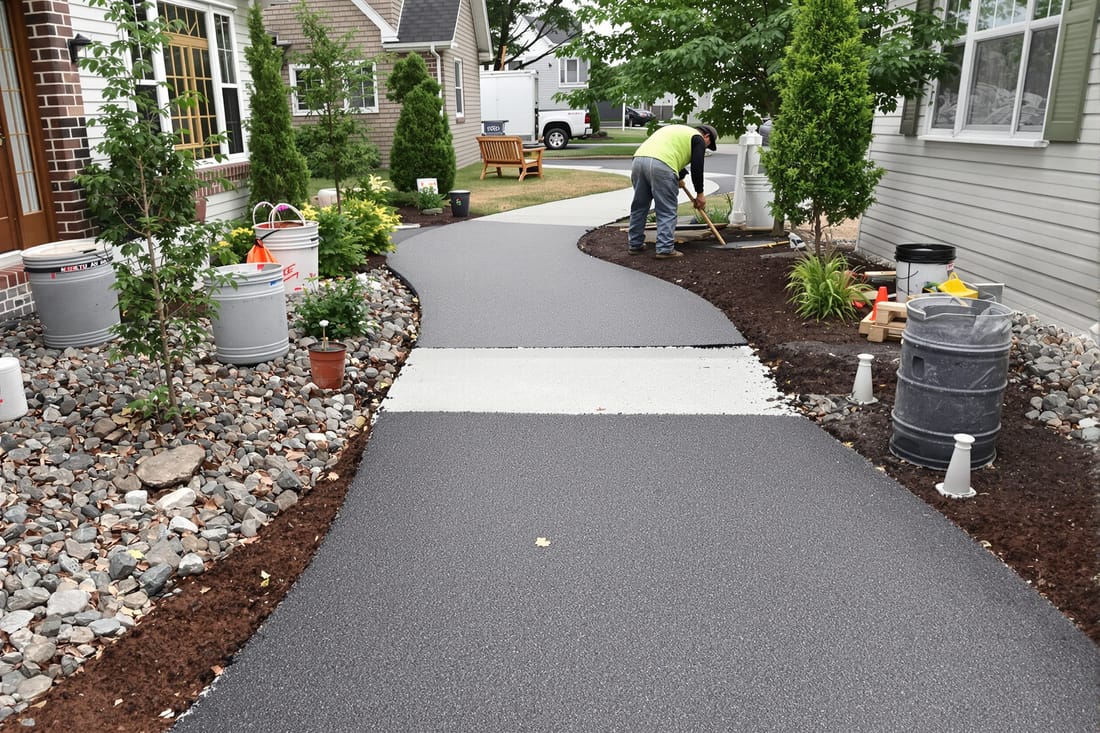
5. Asphalt placement: We install a hot mix asphalt surface, often 2 inches compacted for pedestrian only paths and thicker for mixed use. On confined or curved paths we usually place asphalt with small pavers or by controlled hand placement, then compact it with a roller and plate tampers near edges to achieve a smooth and even finish.
6. Finishing and joints: Transitions to concrete entries, ramps, and existing pavements are feathered so there is no abrupt lip. Where new asphalt ties into old surfaces we saw cut and tack coat the joint so the connection bonds and does not ravel.
7. Clean up and walkthrough: We remove spoils, sweep the new path, and walk it with you to confirm slopes, edges, and access points are all correct before turning it over for use and striping if needed.
Design Choices for Appearance, Safety, and Accessibility
Asphalt walkway paving is more flexible than many property owners realize. Once the structure is engineered correctly, there are several design decisions that affect how the path looks and how people experience it.
Surface texture: For walkways we target a compacted surface that is smooth to walk or roll on but not polished. Proper compaction and mix selection give enough micro texture that shoes and wheelchairs have grip, which matters when North Texas storms leave the surface wet.
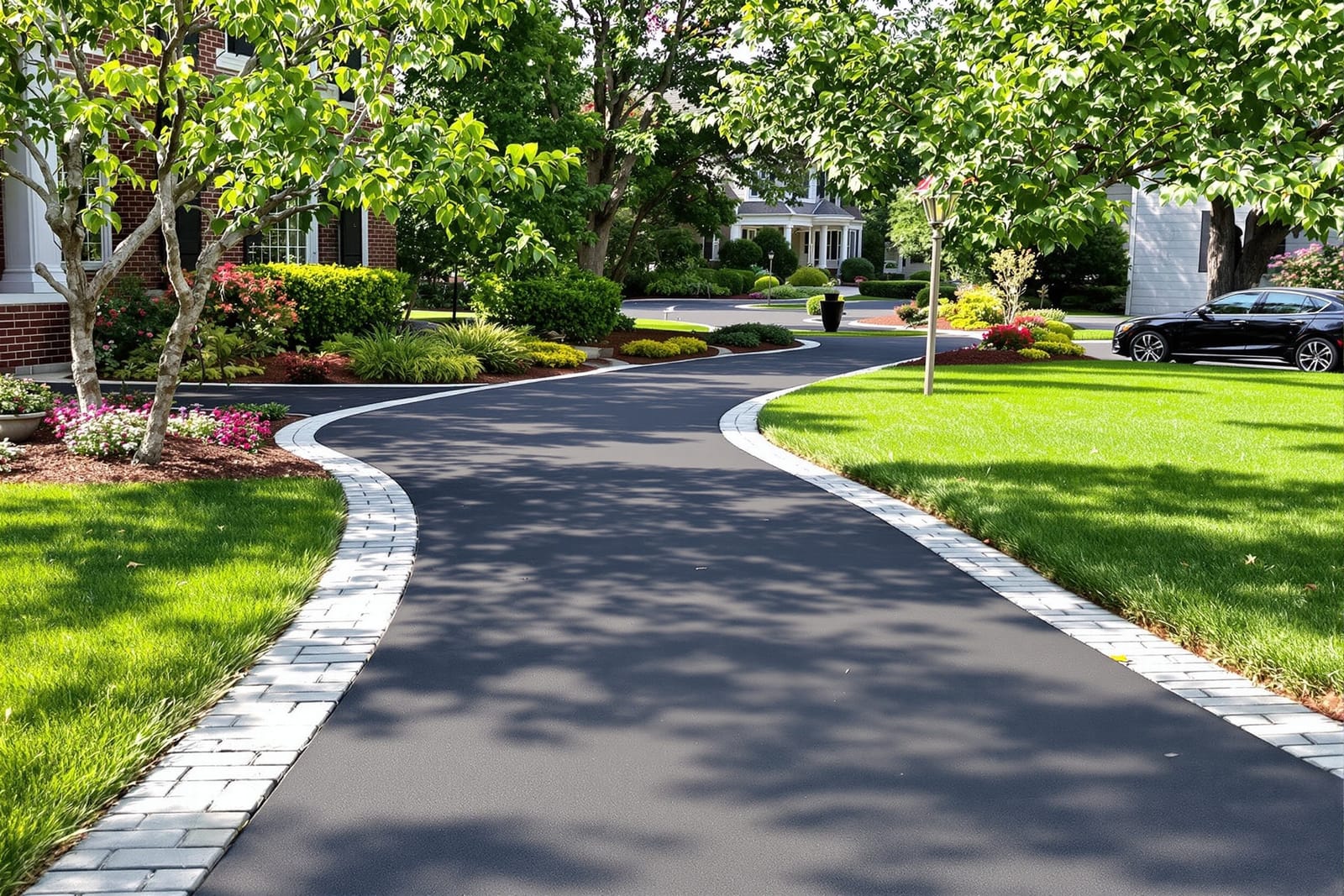
Color and edging: Standard asphalt is black to dark gray. In high visibility areas like office plazas or school entries, we can pair the asphalt path with contrasting concrete edging or brick bands to define the route and help visually impaired users track the walkway edge. This is especially useful around parking lots and crosswalks.
Width, rest areas, and turnouts: For longer community paths we often integrate wider pull out sections for benches, trash receptacles, or meeting spots. These are designed with the same base and asphalt as the main path so they do not settle differently or create trip edges.
Accessibility: ADA compliance in Arlington means controlling maximum slopes, cross slopes, and level landings at doors, ramps, and crossings. We set grades during design so wheelchair users, strollers, and carts can travel comfortably, and we coordinate with concrete contractors for curb ramps and detectable warning panels where your walkway meets vehicular areas.
What Affects Cost for Asphalt Walkway Paving in Arlington
Two walkways of the same length can have very different costs. Precision Asphalt Arlington is transparent about what drives pricing so you can compare bids fairly.
Site access: Tight backyards, interior courtyards, or paths behind buildings can limit equipment size. If we cannot bring in standard pavers or rollers, more hand work and smaller compactors are required, which increases labor time.
Soil and base requirements: Unstable or expansive soils in parts of Arlington may require deeper excavation, undercutting soft spots, or thicker base to reach a stable platform. If we find pumping clay or old fill during preparation, we discuss options before proceeding so you know why any change in scope is necessary.
Thickness and usage: A path that only sees foot traffic can use a lighter section than one that will carry golf carts, maintenance trucks, or service vehicles. More asphalt and base thickness improves performance but also affects materials cost.
Drainage and grading: If your walkway route crosses low areas, ties into a detention pond, or needs significant regrading to get water to flow away, earthwork and possible drainage components such as swales or area drains will affect the final price.
Add ons: Decorative edging, tie ins to new or existing concrete pads, lighting conduit under the walkway, or integrated pads for benches and trash cans are all best done during paving but do add to the total investment. We break these items out clearly so you can prioritize what matters most for your property.
Common Problems With Walkways and How We Prevent Them
Poorly built paths in Arlington frequently show the same issues: ponding water, edge cracking, tree root heave, and surface raveling. We design and build your walkway to avoid these problems from the start.
Ponding and slick spots: Flat or reverse sloped walkways trap water, which accelerates surface wear and can cause algae growth. We set consistent slopes and use a straightedge during paving to verify there are no unintended low spots, especially near building entries and at ties to existing concrete.
Edge failure: When asphalt is placed directly against soft soil with no support, edges crumble and crack as people walk near the side. We combat this with proper base width beyond the asphalt edge, compacted shoulders, or hard edging where appropriate so the sides stay tight.
Tree roots and movement: In neighborhoods and campuses with mature trees, roots will eventually push on shallow pavements. We adjust alignments around major root zones when possible, consider limited root pruning with arborist input, and use thicker sections where we know some movement is likely so the surface has more ability to flex without breaking.
Surface wear and raveling: In high use areas like school walkways and routes from parking lots to businesses, constant traffic can wear an underdesigned mix. We specify mixes suitable for pedestrian and light service use, and we can recommend periodic sealcoating once the pavement has cured to slow oxidation under the Texas sun.
What Arlington Property Owners Should Ask Before Hiring
If you are comparing contractors for asphalt walkway paving in Arlington, focus on how they plan to build, not just the stated price per foot.
Ask about section design: A qualified contractor should be able to explain proposed base thickness, asphalt thickness, and expected loads using clear numbers, not vague assurances. If a bid does not mention base at all, that is a concern.
Request local project examples: Precision Asphalt Arlington can point you to completed walkways at Arlington businesses, churches, or communities that have gone through several summers and storms. Seeing how a path looks a few years in is more informative than fresh photos.
Discuss drainage strategy: Your contractor should describe where water will go once the path is installed. If the answer is simply that the water will run off without specific slopes or discharge points, the design may not be detailed enough.
Clarify access and protection: Walkways are often installed near entrances and landscaped areas. Ask how the crew will protect turf, irrigation components, and existing concrete, and how they will stage equipment to minimize disruption to tenants, residents, or customers.
When you are ready to talk through your project, Precision Asphalt Arlington will walk the site with you, explain options in plain terms, and provide a straightforward proposal tailored to the conditions on your property, not a copy and paste template.