Home › Asphalt Pathways, Sidewalks, and Trails
Connect people and spaces with asphalt pathway paving in Arlington, TX. We build smooth sidewalks and multi use trails for parks, campuses, and communities that are comfortable to walk, run, or bike on.
Precision Asphalt Arlington provides professional asphalt pathway paving throughout Arlington, TX, Texas and the surrounding area. Our licensed, insured crew delivers safe, clean, on-time work with a free estimate before anything begins. Call (817) 646-5980 or request your free quote.
Asphalt Pathway Paving in Arlington, Built for How You Really Use It
Asphalt pathways, sidewalks, and trails need to match how people actually use your property, not just look good on day one. At Precision Asphalt Arlington, we start by walking the route with you on site in Arlington, TX. We look at how people move now, where water already collects, and where tree roots or utilities might be an issue. That walkthrough shapes the pathway width, layout, and thickness so you do not end up paying for the wrong design.
We commonly install asphalt pathways for HOA common areas, apartment communities, school campuses, business parks, churches, and city or county facilities. For light pedestrian use, we may recommend a 2 to 3 inch asphalt surface over a compacted base. For multi use trails that see bikes, maintenance carts, or golf carts, we typically step up to a thicker section and a stronger base. The point is to build something that feels solid underfoot and does not start cracking after a couple of hot summers.
Arlington’s heat and clay soils are tough on pavement. That is why we focus on drainage and subgrade first. You get a pathway that stays smooth longer, instead of one that shifts and alligator cracks around the first low spot. Precision Asphalt Arlington designs each pathway or trail to handle North Texas weather and the actual traffic you expect, rather than a generic one size fits all section pulled from a book.
How We Build Durable Asphalt Pathways, Sidewalks, and Trails
The quality of an asphalt pathway is set long before the first load of hot mix shows up. We begin by clearing and grubbing the route, removing grass, roots, and soft topsoil. If the soil is particularly weak or we hit an old fill area, we may undercut and replace it, or add a stabilizing layer so the pathway does not sink or ripple later. In Arlington’s clay, this step matters more than most people realize.
Next, we shape and compact the subgrade, then add a crushed limestone or recycled concrete base. For most pathways, that base is 4 to 6 inches thick, compacted in layers with a vibratory roller. We check slope and grade continuously so water runs off to the side and does not sit on the pavement. Poor drainage is the fastest way to ruin a new asphalt sidewalk or trail.
Once the base is tight and to grade, we place hot mix asphalt, usually a fine graded surface mix for a smoother walking and biking surface. We haul the mix from a local plant, time the delivery so temperatures stay in the right range, then spread and compact with a small paver or skid steer and roller, depending on access. Joints are overlapped and compacted so you do not feel seams when you walk, run, or push a stroller. After final rolling, we check for low spots with water or straightedges so issues are corrected while the mix is still workable.
Design Choices: Widths, Edges, and Surface Options
Most Arlington HOAs and commercial properties choose pathway widths between 4 and 8 feet, but the right size depends on how the space will be used. A narrow 4 foot connector might work behind a building, while a main multi use trail may need 8 to 10 feet to keep walkers and cyclists from crowding each other. Precision Asphalt Arlington will talk through how many users you expect, if maintenance vehicles will use the trail, and whether ADA passing zones are needed.
Edge support is another decision that affects longevity. For simple residential walk paths inside a fenced yard, a compacted shoulder may be enough. For public trails or sidewalks that see more load, we often recommend either a wider base course or a concrete ribbon along the edge to prevent edge cracking and raveling. In landscaped areas, we can coordinate asphalt edges with steel edging, curbing, or mow strips so maintenance crews are not breaking up the path with string trimmers.
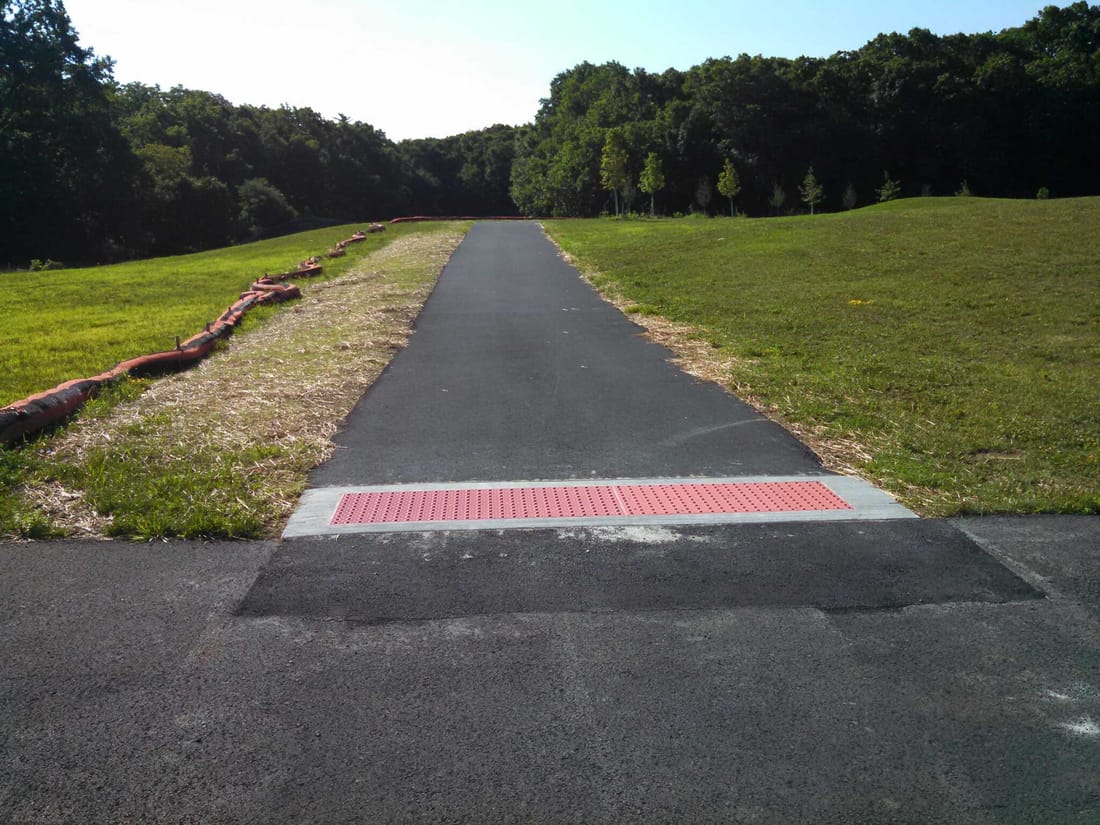
Surface texture is customizable too. A finer mix provides a smoother surface that is comfortable for walkers, strollers, and wheelchairs. For trails that see a lot of bike traffic or occasional light vehicles, we may suggest a slightly coarser mix that still feels smooth to the touch but offers better skid resistance in wet weather. Where required, we incorporate ADA compliant transitions at ramps, drive crossings, and sidewalk tie ins so there are no abrupt lips or trip hazards.
What Drives Asphalt Pathway Paving Cost in Arlington
Pathway paving costs are not just about how many square feet you have. The main drivers are access, base work, thickness, and site conditions. A straight, open trail behind a warehouse with easy truck access will cost less per foot than a winding HOA path that requires smaller equipment and hand work. If trucks cannot reach a section, we may have to shuttle mix in smaller loads, which increases labor time.
Subgrade and base correction are often the biggest wild cards. If we find soft spots, old tree stumps, or poorly compacted fill, those areas must be removed or stabilized so the new asphalt does not fail. In Arlington’s older neighborhoods, we also run into buried irrigation lines and shallow utilities, which may require adjustments. Precision Asphalt Arlington flags these issues during the site visit and explains how each choice affects the bottom line.
Thickness and mix type also matter. A basic pedestrian pathway with minimal cart traffic can often be built with a thinner asphalt section over a quality base. Trails that will carry maintenance trucks, golf carts, or emergency vehicles need more structure and sometimes an upgraded base. Finally, timing affects cost. Summer afternoons can make compaction harder because the mix cools slowly, while cold snaps in winter limit paving hours. The best balance of schedule and performance in Arlington is often in spring and fall, when temperatures are moderate and rain is less intense than in early spring storms.
Common Problems and How We Prevent Them
Most problems people see on asphalt pathways and sidewalks come from three things: poor subgrade, trapped water, and thin or poorly compacted asphalt. You see this around town as low spots that always hold water, cracked edges where the base is missing, or waves in the surface from heavy carts. We address each of these during design and construction so you are not calling for repairs after only a couple of years.
To fight subgrade movement in our local clay soils, Precision Asphalt Arlington focuses on uniform support. We avoid leaving pockets of soft soil next to hard areas, because that is where cracks and dips form. Where we know trees will grow or roots already exist, we adjust alignment or depth so roots are less likely to heave the pavement.
For drainage, we build consistent cross slope and, when needed, add shallow swales or tie into existing storm features so water has somewhere to go. On long runs, we break the grade into segments so water does not rush down the trail and erode the sides. Compaction is checked in both base and asphalt, and if we see any signs of slippage, we roll again or rework that section. We would rather fix it while we are on site than leave you with a weak spot that turns into a pothole or trip hazard.
When damage does occur, we can mill and overlay, sawcut and patch, or, in severe cases, rebuild short sections. For public or high traffic pathways, we can phase repairs so at least part of the trail stays open while work is being done.
Planning Your Project and Working With Precision Asphalt Arlington
Before you hire anyone for asphalt pathway paving, get a clear scope and layout on paper. You should know the intended width, thickness, base depth, and how the contractor plans to handle drainage and tie ins to existing concrete or asphalt. For commercial and HOA projects in Arlington, it also helps to review access points, staging areas, and how resident or tenant traffic will be managed while work is in progress.
When you contact Precision Asphalt Arlington, we schedule a site visit, walk the route with you, discuss how the path or trail will be used, and measure the area. We explain pros and cons of different sections and base options so you can choose between lower first cost and longer term durability. If you have existing concrete sidewalks or parking lots, we will plan clean connections so there are no abrupt bumps or mismatched grades.
We typically recommend scheduling pathway and trail work in Arlington from late March through early June or from late September through early November. These windows usually offer stable temperatures and fewer extreme storms, which helps with compaction and curing. That said, we work year round when conditions allow and can phase work so parts of your property remain open. At the end of the job, we walk it with you, note any punch list items, and discuss simple maintenance steps like keeping edges trimmed, addressing small cracks early, and avoiding heavy vehicles if the path was designed for pedestrians only.